Imagine someone in Ikeja needs a web designer. They pick up their phone, open Google and search for "website designer in Ikeja".
Several businesses appear. Some have photographs, customer reviews, phone numbers, websites and directions. Others have very little information.
The customer looks through the results, compares a few businesses and contacts one that appears trustworthy.
Now imagine that you are a web designer operating in Ikeja. You have a website, an active business and years of experience, but your business does not appear among the results the customer sees.
You might have excellent services. Your prices might be competitive, and your customers might be satisfied with your work. But if people searching for those services cannot find you, you are missing opportunities to attract new customers.
This is one of the problems local search engine optimisation (local SEO) is designed to address.
Many Nigerian business owners understand that having a website is important. Some have also created social media pages and registered their businesses on Google. However, having these things individually does not automatically mean that local customers can find them when searching for relevant services.
Your business needs to be discoverable, understandable and trustworthy across the places where potential customers look for information.
Let's explore how local SEO works, why some businesses struggle to appear in local search results and what you can do to improve your visibility.
What Exactly Is Local SEO?
Local SEO is the process of improving your business's visibility in search results when people look for products or services within a particular geographical area.
Unlike general SEO, which may target people searching from anywhere, local SEO focuses on searches with a geographical connection.
For example:
- Web designer in Lagos.
- Plumber in Lekki.
- Restaurant in Ikeja.
- Accountant in Abuja.
- Printing company in Ibadan.
- Computer repair service near me.
Notice that these searches are not necessarily looking for the best provider anywhere in the world. The searcher wants a business they can contact, visit or receive services from within a relevant location.
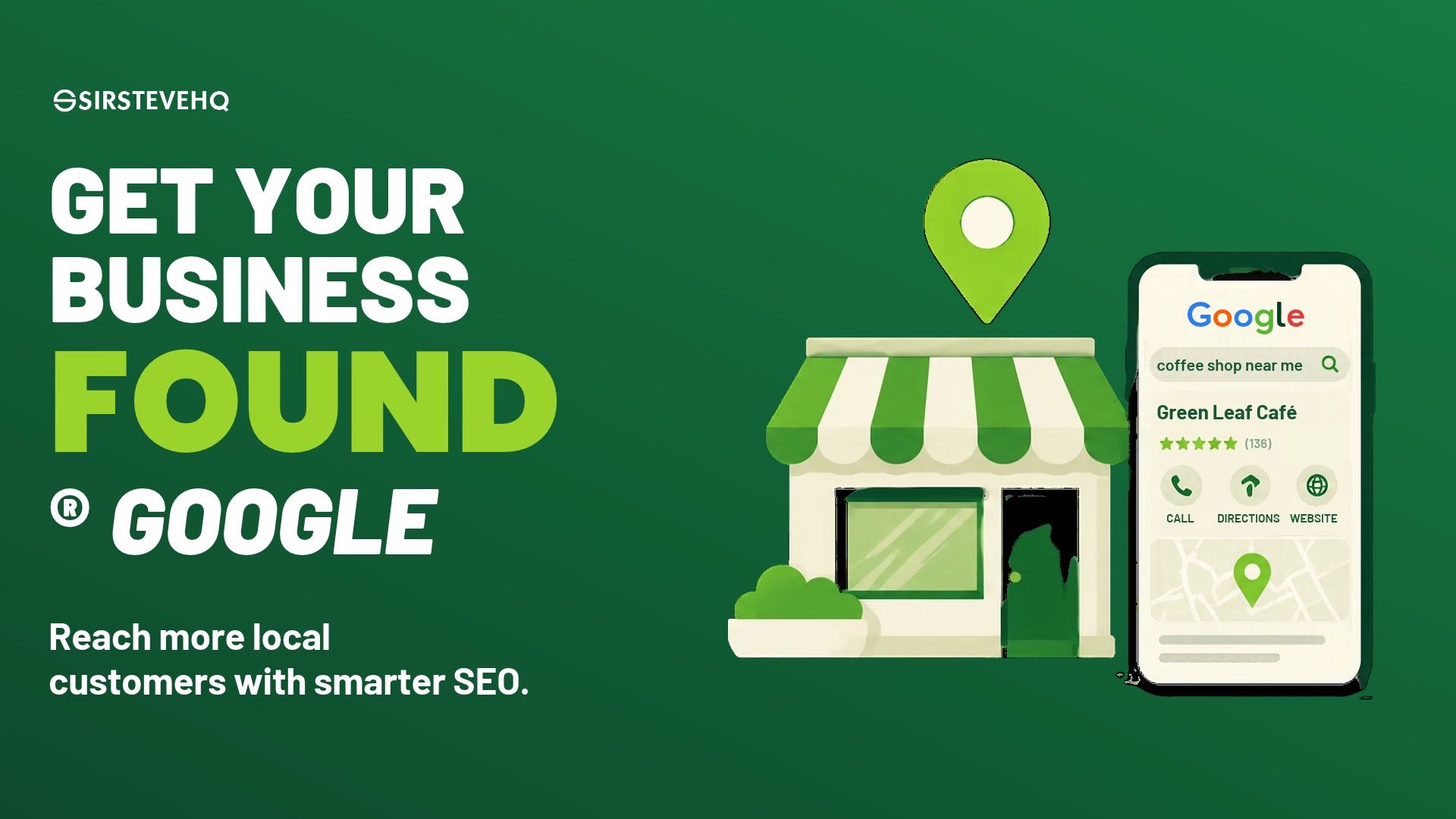
Google can display local businesses through Google Maps and local search results. Depending on the search, someone may see a map with business listings, ratings, opening hours, photographs, contact details and website links.
For a business that serves a particular community, appearing in these results can make it easier for potential customers to discover its services.
However, local SEO is not limited to appearing on Google Maps. Your website, business information, online reputation and content can all contribute to how customers discover and evaluate your business.
Why Some Businesses Are Difficult to Find on Google
There are several reasons a business might not appear prominently in local search results.
Sometimes, its Google Business Profile is incomplete. In other cases, the business has little information online, an outdated address or a website that does not clearly explain its services.
Consider a small accounting firm in Lagos.
The firm has operated for five years and has served several businesses. It has a Facebook page, a WhatsApp number and a website. However, its website only says that it provides professional accounting services.
There is no detailed explanation of its services, no useful information about the business location, and very little evidence of its experience.
When someone searches for a specific accounting service in the area, Google has limited information to understand what the business offers and how relevant it might be to that search.
This does not mean that adding more words to a website will automatically improve its rankings. It means that a business should provide clear, accurate and useful information that helps both customers and search engines understand what it does.
Google explains that local search results are primarily influenced by three factors: relevance, distance and prominence.
Understanding these three factors provides a useful starting point for improving local visibility.
1. Understand How Google Decides Which Local Businesses to Show
Google does not simply display businesses in alphabetical order or rank them according to who has the most attractive website.
According to Google's Business Profile documentation, local results are mainly based on relevance, distance and prominence.
Relevance refers to how well a business profile matches what someone is searching for.
For example, if someone searches for a photography studio, a photography business with accurate categories and detailed information about its services is more relevant than a business whose profile primarily describes unrelated services.
Distance refers to how far a business is from the person searching or the location specified in the search.
For example, someone searching for a restaurant in Lekki may receive different results from someone searching for the same type of restaurant in Ikeja.
Prominence refers to how well-known a business is. Google considers information from across the web, including links to the business and customer reviews.
These factors work together. A business that is highly relevant to a search may still appear below another business because of distance or other signals.
This is important because it explains why there is no guaranteed shortcut to becoming the first local result.
You cannot simply add your location to every sentence on your website and expect Google to rank you above every competitor.
You need to build a genuine and complete online presence.
Source: Google Business Profile: Tips to Improve Your Local Ranking.
2. Create and Properly Set Up Your Google Business Profile
If your business serves customers in a particular location, one of the most useful places to start is Google Business Profile.
Google Business Profile allows eligible businesses to manage how their information appears across Google Search and Maps.
When someone searches for your business name, your profile may display information such as your business address, telephone number, opening hours, photographs, reviews and website.
For a local business, this can make an important difference.
Imagine operating a salon in Surulere. Someone searching for salons nearby may discover your business through Google Maps without having to know your website address beforehand.
However, creating a profile is only the beginning. You need to ensure that the information is accurate and complete.
Start by checking the following:
Business name: Use the real-world name of your business. Do not add unnecessary keywords or location names simply to manipulate search results.
Business category: Select the category that most accurately represents your main business. Add other relevant categories only where appropriate.
Address or service area: If customers visit your business premises, provide an accurate address. If you operate as a service-area business and customers do not visit your premises, follow Google's rules for service-area businesses rather than using an address where you do not operate.
Telephone number: Provide a number customers can actually use to reach your business.
Opening hours: Keep your operating hours accurate, including special opening hours where applicable.
Website: Add your official website so customers can learn more about your services.
Photographs: Upload genuine photographs of your premises, products, team or work where appropriate.
Google states that complete and accurate business information helps it understand what a business does, where it operates and when customers can visit.
You should also verify your profile using Google's available verification process.
One important warning: do not create fake business locations or use an address simply because it is in a more commercially attractive area. Your profile should represent your actual business operations.
You can manage your listing through Google Business Profile.
3. Your Website Still Matters, Even If You Have a Google Business Profile
Some business owners assume that once their Google Business Profile is active, they no longer need a website.
That is a mistake.
Your Business Profile helps people discover and evaluate your business, but your website gives you more room to explain what you do, demonstrate your experience and guide potential customers towards taking action.
Consider a company offering website design in Lagos.
Its Google Business Profile may show its business name, address, telephone number, photographs and customer reviews.
But a potential customer might want to know much more:
- What types of websites does the company build?
- Does it design eCommerce websites?
- Can it build websites for professional services?
- How does the design process work?
- How can customers request a quotation?
- Does the company provide ongoing support?
A properly developed website can answer these questions.
It also gives you control over your business information rather than depending entirely on social media platforms or third-party listings.
For local SEO, make sure your website clearly communicates:
What your business does: Explain your products and services using language your customers understand.
Where you operate: Mention relevant locations naturally where they are genuinely connected to your business.
How customers can contact you: Make your telephone number, email address, enquiry forms and other contact options easy to find.
Why customers should trust you: Include genuine customer feedback, examples of completed work, relevant qualifications and useful business information.
What customers should do next: Give visitors a clear way to request a quotation, book an appointment, make an enquiry or purchase a product.
A website should not merely contain your business name and telephone number. It should help someone understand why your business might be the right choice.
4. Create Useful Location and Service Pages
If your business operates in multiple locations or provides several services, your website should make those distinctions clear.
For example, a company providing plumbing, electrical installation and air-conditioning services may benefit from having separate pages explaining each service.
This helps customers find the specific information they need.
Similarly, a business serving multiple locations may need to explain its service coverage.
Imagine a cleaning company operating in Ikeja, Yaba, Surulere and Lekki.
Instead of creating one vague page that simply says "We provide cleaning services in Lagos", it could provide useful information about its services, the areas it genuinely serves and how customers in those locations can make enquiries.
However, there is an important distinction between useful location pages and pages created solely to manipulate search rankings.
Creating dozens of almost identical pages with only the location name changed does not automatically improve SEO. Such pages can offer little value to visitors and may fall within Google's doorway abuse or scaled content abuse policies, depending on how they are created and used.
A useful location page should provide meaningful information.
It might explain the services available in that area, how appointments work, relevant service limitations and what customers should expect.
If you only serve one location, there may be no reason to create multiple location pages.
The goal is to answer real customer questions, not manufacture pages for every neighbourhood.
5. Keep Your Business Information Consistent Across the Internet
Imagine that a customer finds your business on Google and sees one telephone number.
They visit your website and discover a different number. Then they check an online directory and find an old business address.
Which information should they trust?
Inconsistent business information can confuse customers and make it harder for them to contact you.
This is why businesses should regularly review their online information.
Check important details such as:
- Business name.
- Telephone number.
- Business address, where publicly applicable.
- Website address.
- Opening hours.
- Main services.
- Business descriptions.
Review your website, Google Business Profile, relevant social media pages and business directories where you have active listings.
If your business moves to a new location or changes its contact details, update these platforms.
This is not a promise that identical information across every directory will automatically improve rankings. Rather, it helps customers verify that the information they find belongs to the same business.
It also reduces the chances of someone contacting an outdated telephone number or travelling to an address where your business no longer operates.
6. Customer Reviews Can Influence How People Choose Your Business
Think about the last time you searched for a restaurant, hotel, repair service or professional.
Did you check the reviews before making a decision?
Many customers do.
Reviews provide insight into other people's experiences and can help potential customers decide whether to contact a business.
For local businesses, this is particularly important because customers may be choosing between several providers offering similar services.
A business with detailed, genuine customer feedback may give potential customers more confidence than another business with no reviews or incomplete information.
Google also identifies review count and positive ratings as factors that can contribute to local prominence.
But collecting reviews should be approached properly.
After completing a project or serving a customer, you can politely invite them to share an honest review of their experience.
For example, a website design company could send a short message after handing over a completed website, thanking the customer and providing a link to its Google review page.
You should not:
- Buy fake reviews.
- Create reviews using multiple accounts.
- Ask employees to pretend to be customers.
- Offer money or gifts in exchange for positive reviews.
- Pressure customers into changing honest negative feedback.
Google has policies against fake engagement and manipulated reviews.
Also, do not ignore negative feedback.
Respond professionally, acknowledge legitimate concerns and explain how you intend to address the issue. Avoid disclosing private customer information in public responses.
Remember that a review is not just a ranking consideration. It is part of the experience other people use to evaluate your business.
7. Publish Content That Answers Questions Your Local Customers Actually Ask
Your website should not exist only to display your services.
It can also become a useful source of information for people researching problems related to your industry.
For example, a real estate company in Lagos could publish articles explaining the documents buyers should understand before purchasing property.
A computer repair business in Abuja could write about common laptop problems and what customers should check before paying for repairs.
A web design company could explain the difference between a basic business website and an eCommerce website.
This type of content can attract people who are not yet ready to purchase but are actively researching a problem.
The important thing is to write about subjects that genuinely relate to your business and audience.
You do not need to mention your city in every heading or paragraph. A useful article that answers a real question is more valuable than content filled with repeated location keywords.
A good content strategy should connect informational articles with relevant service pages.
For example, an article explaining what to consider before launching an online store could naturally link to your eCommerce website design service.
This gives readers a path from learning about a problem to discovering how your business can help solve it.
8. Make Your Website Technically Ready for Local Customers
Even when your business information is accurate and your content is useful, technical website problems can affect the experience customers have when they visit.
Imagine someone discovers your business through Google Maps and clicks your website link.
The website takes too long to load. The contact button is difficult to find, and the page does not display properly on their phone.
That customer may leave before learning what you offer.
For Nigerian businesses, mobile usability deserves particular attention because many potential customers browse using smartphones and mobile internet connections.
Your website should be designed to work properly across different screen sizes and network conditions.
Pay attention to:
Mobile responsiveness: Your pages should display correctly on smartphones and tablets.
Website speed: Optimise images, scripts and other resources that unnecessarily slow down your pages.
Security: Use HTTPS and maintain a valid SSL certificate.
Navigation: Make important pages easy to locate.
Contact functionality: Ensure telephone links, enquiry forms and other contact methods work properly.
Hosting reliability: Choose a hosting environment that can support your website's requirements.
Your hosting provider is not a substitute for local SEO, and changing hosting plans does not automatically improve local rankings. However, a reliable and properly configured website provides the technical foundation customers need when they visit.
If you are building a new website or improving an existing one, SIRSTEVEHQ offers Website Design services alongside hosting options such as WordPress Hosting and Cloud Hosting.
The appropriate solution depends on the website you are building and the requirements of your business.
9. Use Structured Data to Help Search Engines Understand Your Business
There is another technical area worth understanding: structured data.
Structured data is a standardised format that helps search engines interpret information on a webpage.
For a local business, LocalBusiness structured data can communicate details such as the business name, address, telephone number, opening hours and other supported information.
For example, a restaurant website could use relevant structured data to describe its business details and operating hours.
This does not mean that adding structured data guarantees a higher ranking or a special search appearance.
Google explains that structured data helps it understand page content and can make pages eligible for certain search features, but displaying those features is not guaranteed.
It is also important that the information in the markup accurately reflects what visitors can see on the website.
Do not add invented addresses, opening hours, ratings or reviews.
If you use WordPress, structured data may be implemented through an appropriate SEO plugin or by a developer.
You can learn more through Google's official Local Business Structured Data documentation.
For businesses that want to implement this correctly, the priority should be accurate information and valid markup, not adding every possible property simply because it is available.
10. Track Whether Your Local SEO Efforts Are Actually Working
One of the problems with SEO is that business owners sometimes focus on rankings without checking whether those rankings produce meaningful results.
Appearing in Google Search is useful, but what happens afterwards?
Are people visiting your website? Are they calling? Are they requesting quotations? Are they asking for directions or making purchases?
These are the outcomes that matter to a business.
There are several tools you can use to monitor your progress.
Google Business Profile Performance: Depending on your profile and available reporting features, you can review information about how customers discover and interact with your business.
Google Search Console: This helps you understand which searches bring people to your website, which pages receive impressions and clicks, and whether Google is experiencing indexing problems.
Google Analytics: You can use it to understand website visits, traffic sources and actions visitors take, provided your analytics setup is correctly configured.
Enquiry tracking: Record how many enquiries come through your website, telephone calls and other channels. Where practical, ask new customers how they discovered your business.
Review this information regularly.
For example, if your website receives more visitors but enquiries remain unchanged, you may need to improve your service pages, contact forms or calls to action.
If customers are finding your business but frequently asking questions already answered on your website, the information may need to be clearer.
SEO should not be treated as a competition to collect the highest number of impressions. It should help the right people discover your business and take meaningful action.
A Practical Local SEO Checklist for Nigerian Businesses
If you are just starting to improve your local search visibility, you do not need to implement everything at once.
Begin with the fundamentals.
- Create or claim your Google Business Profile if eligible.
- Complete the available business information accurately.
- Verify your business using Google's process.
- Select the most appropriate business category.
- Add genuine photographs of your business or work.
- Keep your contact information and opening hours updated.
- Build a professional website.
- Clearly explain your products and services.
- Include relevant location information naturally.
- Make your website mobile-friendly.
- Invite genuine customers to leave honest reviews.
- Respond professionally to customer feedback.
- Publish useful content related to your industry.
- Check your website's indexing through Google Search Console.
- Monitor enquiries and customer actions.
You can work through these steps gradually. Consistency and accurate information are more useful than rushing to implement every SEO technique you come across.
Final Thoughts: Being in Business Is Not the Same as Being Discoverable
A business can have excellent products, competitive prices and satisfied customers and still struggle to attract new people online.
Sometimes, the problem is not the service itself. Potential customers simply do not know that the business exists.
This is why local SEO deserves attention, especially for Nigerian small businesses competing for customers in busy markets.
Your Google Business Profile helps people discover and evaluate your business. Your website gives them more information and a way to take action. Your reviews provide insight into customer experiences, while useful content helps answer questions people are already searching for.
None of these activities guarantees that you will appear first on Google. Local search depends on several factors, including relevance, distance and prominence, and competition varies from one location and service to another.
But you can make it easier for search engines and potential customers to understand who you are, what you offer and where you operate.
The next time someone searches for a business like yours, the goal should be simple: make sure they have a genuine opportunity to find you.
Your business may already be good enough to earn the customer's trust. The next challenge is making sure the customer can discover it.














Comments (0)
No comments yet. Be the first to comment!